How to Self-Publish a Book: Getting Your Story to Your Audience

Have you ever dreamed of seeing your name on a book cover? This dream is more achievable than you think. Today, self publishing a book is no longer reserved for the few individuals who secure a traditional publishing deal. You can become a competitive self published author if you possess a story or an idea and an audience.
The additional requirement you may need is professional expertise to become a self published author. When you opt for self publishing, you assume control of the process. You write, edit, design and release your book without waiting for a publisher's approval.
This path may have seemed overwhelming in the past. Now, nearly every significant barrier that once existed has been removed by online platforms. What will you learn from this guide? Through this guide, you will discover a clear, step‑by‑step roadmap that leads you forward (from your first draft to a final, live book listing).
You will also get to know the work involved, the common pitfalls you should avoid, and how you get total creative freedom if you choose self-publishing to present your work to the world.
To publish a book once meant finding an agent, securing a deal, and hoping for a printing slot. But now, self publishing a book has removed those requirements, making it easier for anyone to become a self published author.
You prepare your manuscript, choose your services, and release the finished product directly to readers through online stores. You do not have to go through the hassle of permission at any stage. Why has this model become so popular?
The Bowker data tells a clear story. In 2025 alone, American authors self-published more than 3.5 million titles, a figure that represents a 38.7 percent increase from the previous year. On the contrary, traditionally published books grew only 10 percent during that same three-year period.
Several factors explain this shift.
With self publishing, the author gets full ownership. This means that your copyright and profit rights stay with you.
Print-on-demand service has eliminated inventory costs because a book gets printed only when someone buys a copy.
Every service once exclusive to major publishers, including editing, cover design, and formatting, can now be hired independently.
The global market report indicates self book publishing reached $967 million in 2025, and the sector continues expanding.
Self book publishing does not mean doing everything alone but rather grants you the liberty to decide who helps you. You may hire an editor or design a cover yourself, or you might pay a professional. The platform distributes your files, yet you remain in control of every decision.

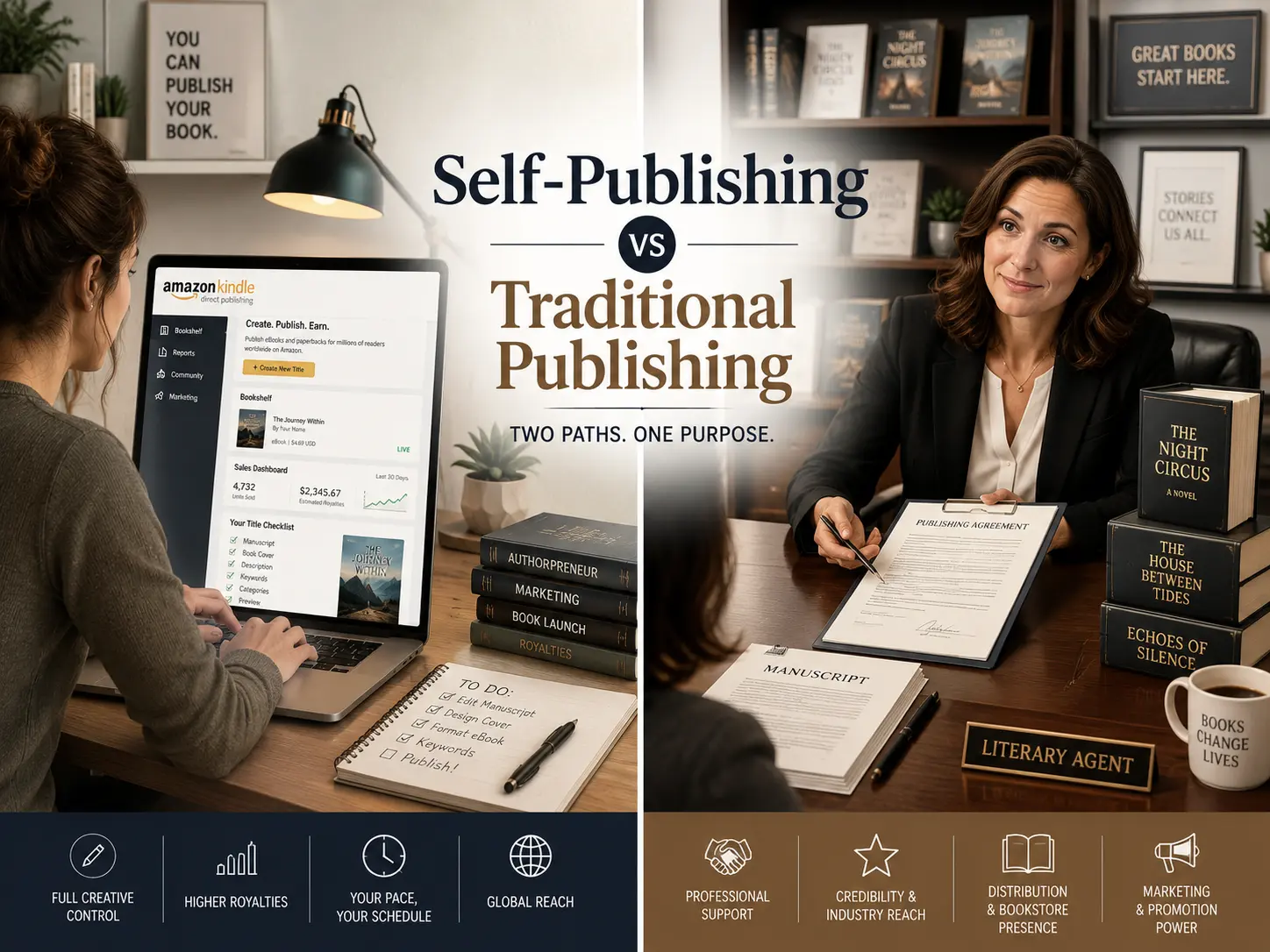
When it comes to publishing, you may face a fundamental choice as a first time author. You may ask yourself or your peers whether to pursue a traditional deal or self publish a book independently. Each path offers different advantages and trade-offs. The right decision depends on your goals, your patience, and your willingness to manage the process yourself.
Traditional Publishing
Publisher covers editing, design, printing, and distribution costs
Advance payment provided against future royalties (typically 10-15 percent of net sales)
Publisher controls final content, cover art, and release schedule
Book appears in physical bookstores through established distributor relationships
Process requires agent representation and can take twelve to twenty-four months from acceptance to shelf
Author receives no decision-making authority on pricing or marketing spend
Self-Publishing
Author finances all services: editing, cover design, formatting, and marketing
No advance payment, but author earns 40 to 70 percent royalties depending on platform and pricing
Author retains final approval on every aspect of the book
Online distribution through Amazon, Apple Books, Barnes & Noble Press, and other retailers
The process requires no agent. Your book can go live within days of final file preparation
Author controls pricing, promotions, and where the book appears
According to industry data, self-publishing platforms have disrupted a market where traditional publishing once held a monopoly on professional knowledge and retail distribution.
This shift saves time, and it offers greater profitability for authors who are willing to manage the process themselves.
For many first-time writers, the concept of self publishing a book initially resembles a mountain. Breaking the entire process into seven distinct steps, however, makes the journey far more manageable.
Each step naturally builds upon the one that came before. When you follow them in their proper order, it will help you sidestep expensive revisions later in your publishing journey.

A single blank page marks the starting point for every published book that has ever existed. Before you direct any attention toward covers, formatting, or platform selection, your sole responsibility involves completing one full draft from beginning to end.
When writing, an outline serves as your roadmap through the entire book writing process. Without one, you may risk losing your direction somewhere in the middle of your manuscript. You can maintain momentum by establishing a daily word count target for yourself, keeping that target modest if necessary.
Always remember that consistency over time matters more than raw volume produced in short bursts. Keeping yourself disciplined ultimately separates those who reach publication from those who never move beyond the planning phase.
Construct a chapter-by-chapter outline before committing a single sentence to the page.
Develop a sustainable writing habit by scheduling your work at the same hour each day.
Refrain from revising or editing any portion until the complete draft has been finished.

No first draft, regardless of how satisfying its completion feels, represents a finished book worthy of readers. This is where editing comes in. Editing serves as a transformation that converts raw manuscript material into something readers will genuinely appreciate.
Professional editing moves in a direction through three distinct levels as each stage corrects different concerns. There is developmental editing that examines the largest structural elements in your writing, including plot coherence, pacing problems, organizational flow, and narrative holes that confuse readers.
The next level, copyediting, then focuses on sentence-level improvements, examining word choice, eliminating awkward constructions, and smoothing rough transitions between ideas.
The last but the most integral part of editing, proofreading is the final quality check, that catches minor spelling mistakes and punctuation errors that earlier passes may have missed. For most authors publishing their first book, beginning with developmental editing delivers the strongest return on their investment.
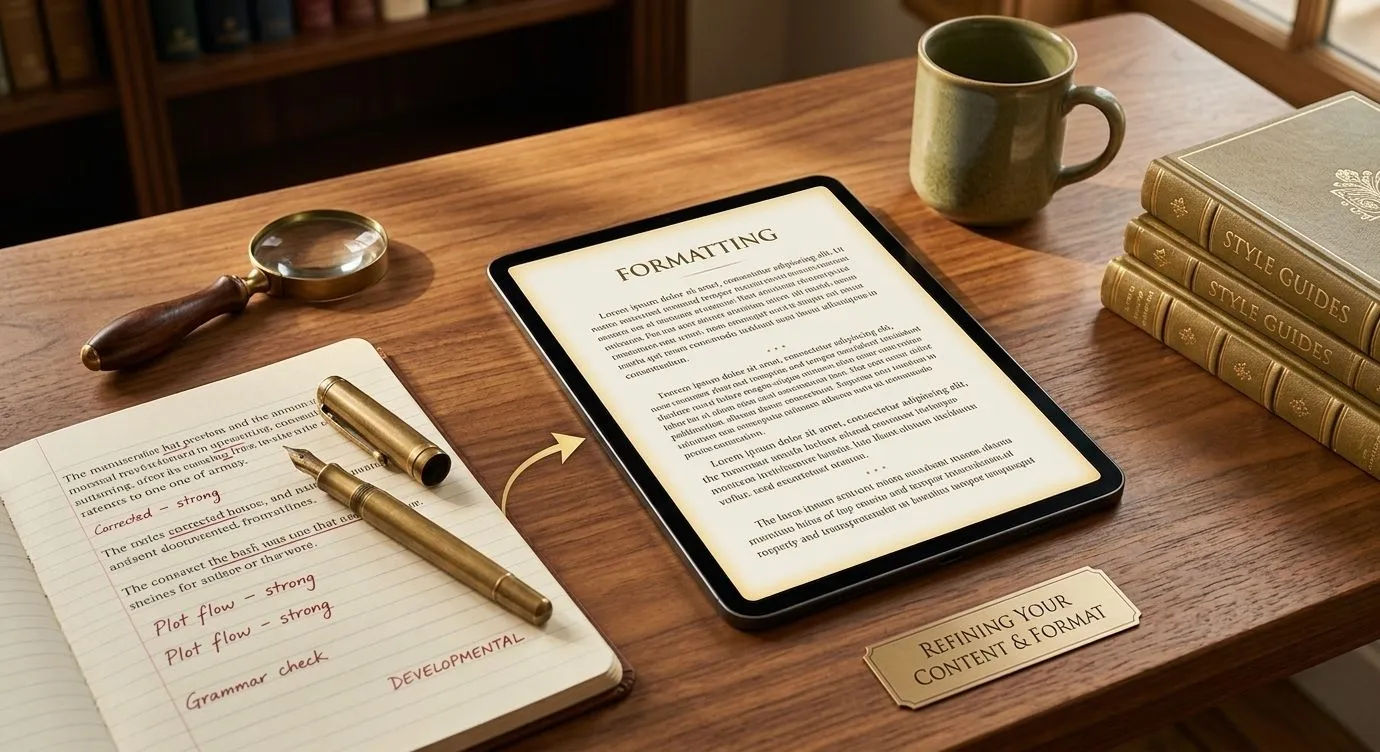
Formatting refers to the technical preparation your manuscript requires before distribution across various devices and reading platforms. An eBook publishing needs reflowable text as its foundation.
This means words automatically reposition themselves to fit whatever screen size a reader happens to be using, whether a compact phone, a tablet, or a dedicated e-reader device.
A print book, by contrast, demands completely different specifications, including fixed page dimensions that never change, consistent margins running throughout the entire document, and appropriate spacing for printed physical pages.
Some authors manage formatting independently using available software tools. Other writers prefer to hire professional book editing and proofreading services who perform this type of work daily as their primary occupation.
The decision between these approaches depends entirely upon your personal comfort level with technical specifications and software configuration. Basic formatting tasks can be accomplished using free tools such as Reedsy or Draft2Digital.
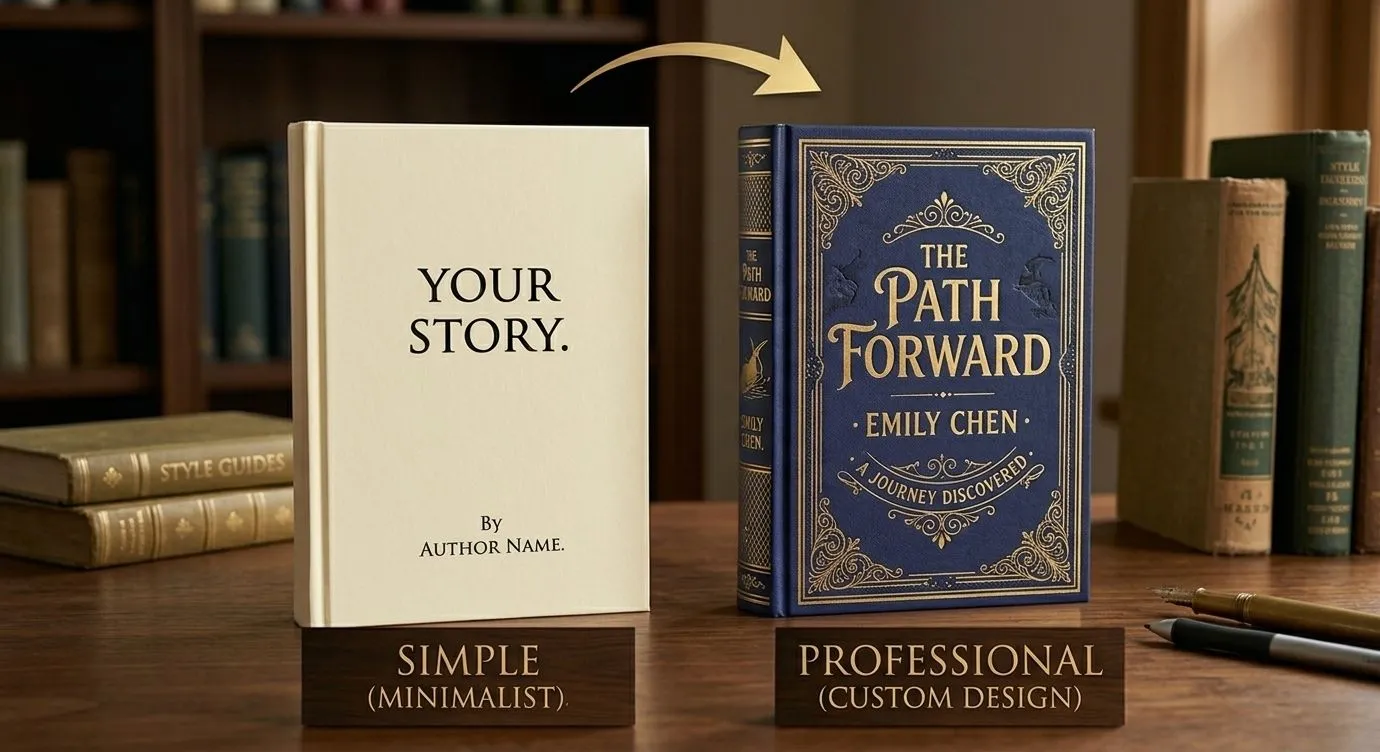
A cover that communicates with the reader sends an immediate visual signal that the content inside meets certain baseline quality expectations.
According to industry research, allocating budget toward an experienced cover designer produces higher sales figures and improved reader attraction compared to budget alternatives.
Today, AI tools for cover creation have become widely accessible, however, solely depending on template-based AI solutions, frequently gives rise to generic visual results that do not stand out in crowded store pages.
When you cut costs with a generic looking cover, you lose more sales than a professionally designed cover created through book cover design services.
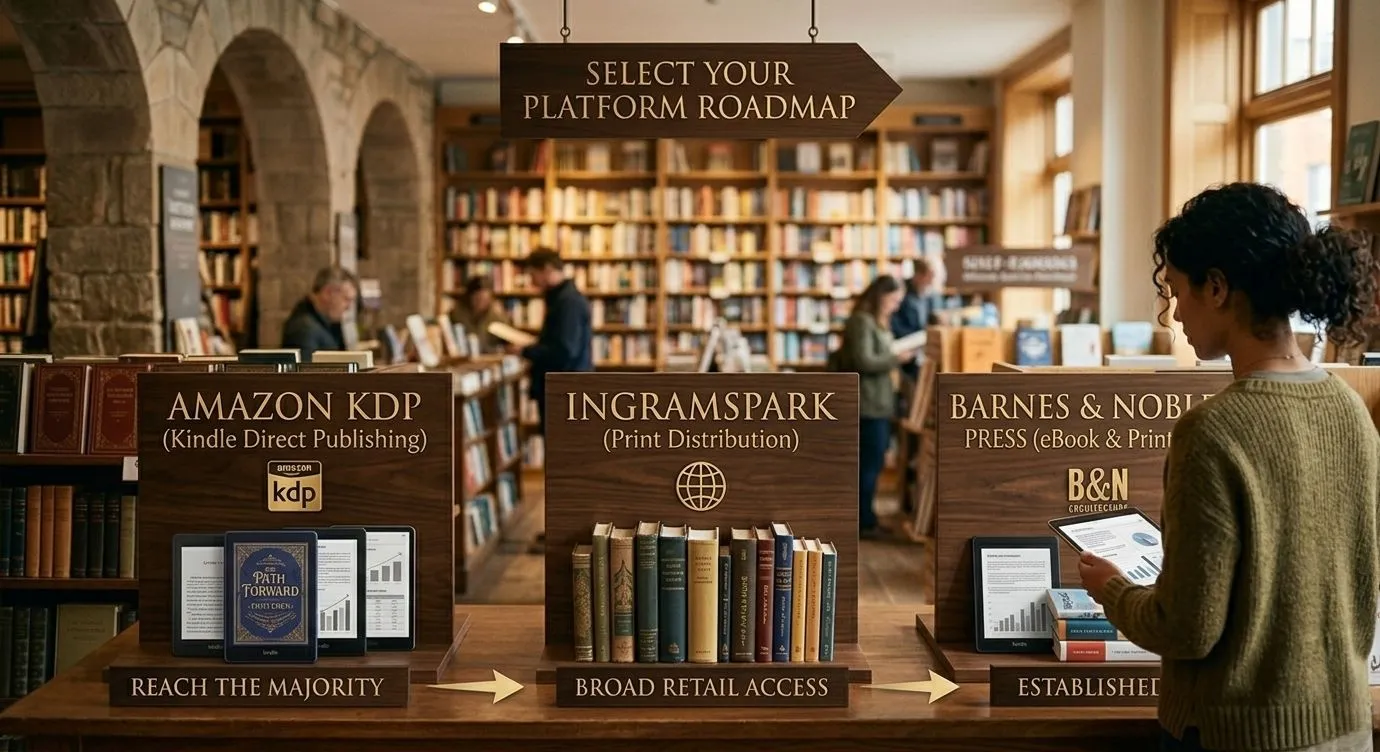
Your selection of where to sell your book affects two important outcomes, specifically your potential reader reach and your per-sale earnings.
If you decide to publish a book on Amazon through KDP (Kindle Direct Publishing), you can do it by following the steps used by majority self publishers as this continues to serve as the most common entry point for first-time authors entering the market.
Market data indicates that Amazon holds an overwhelmingly dominant share of North American self-publishing revenue, and its highly developed operational standards are what competing platforms follow.
Additional distribution channels are available through Barnes & Noble Press, Rakuten Kobo, and IngramSpark for authors seeking broader retail presence.
A practical strategy adopted by many beginners involves launching exclusively on Amazon first, then gradually expanding to other platforms once their book launch shows consistent sales.
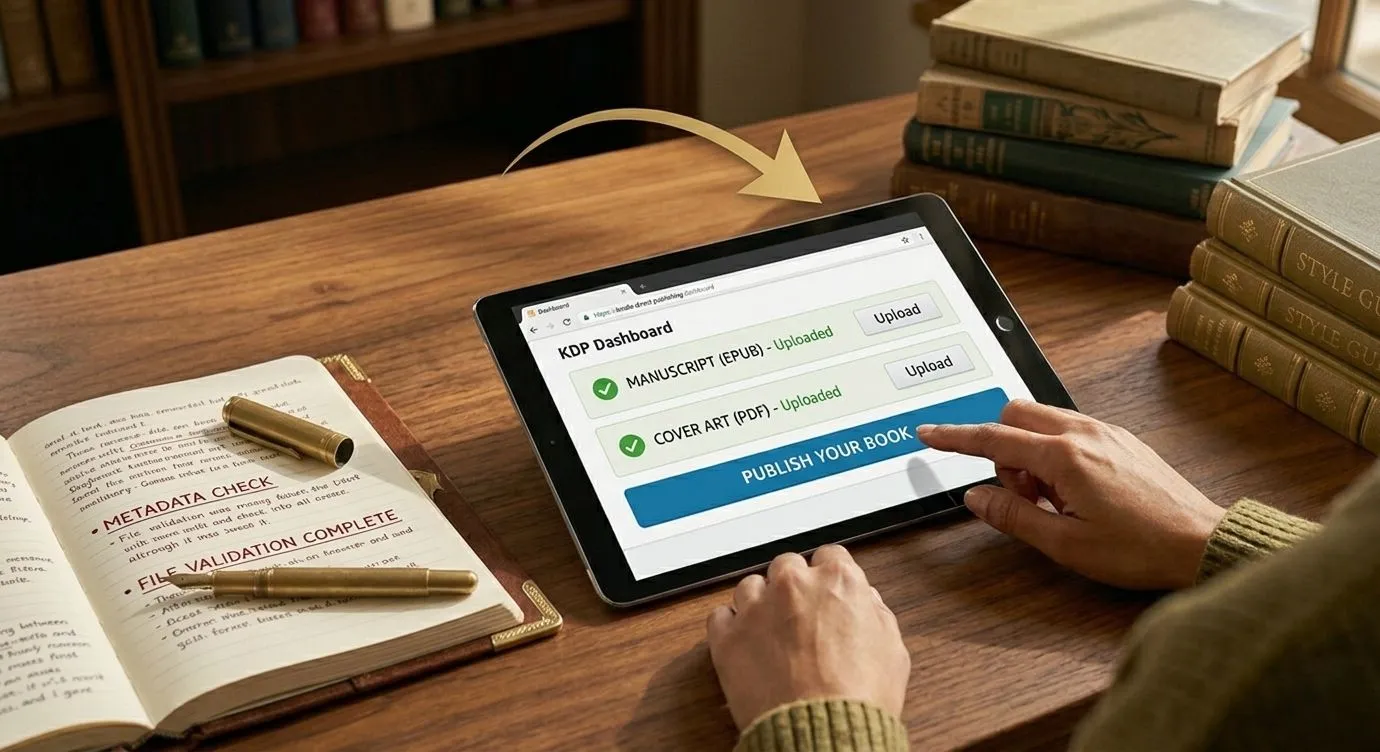
Uploading your manuscript requires more preparation than simply dragging a file onto a website and pressing an upload button. You need three specific assets before you begin the upload process: your correctly formatted manuscript file, final approved cover design, and a compelling book description that professionals refer to as metadata.
The platform tools provide a self-service dashboard interface where you will complete each required field in a sequence. You should expect to invest approximately one hour on your very first upload attempt while you learn where each piece of information belongs.
The platform will automatically validate your submitted files and notify you about any formatting problems before your book becomes publicly visible to shoppers.
An important factor to consider is the double checking of spellings across every single field as metadata errors cannot be corrected after publication without creating and uploading an entirely new edition of your book.
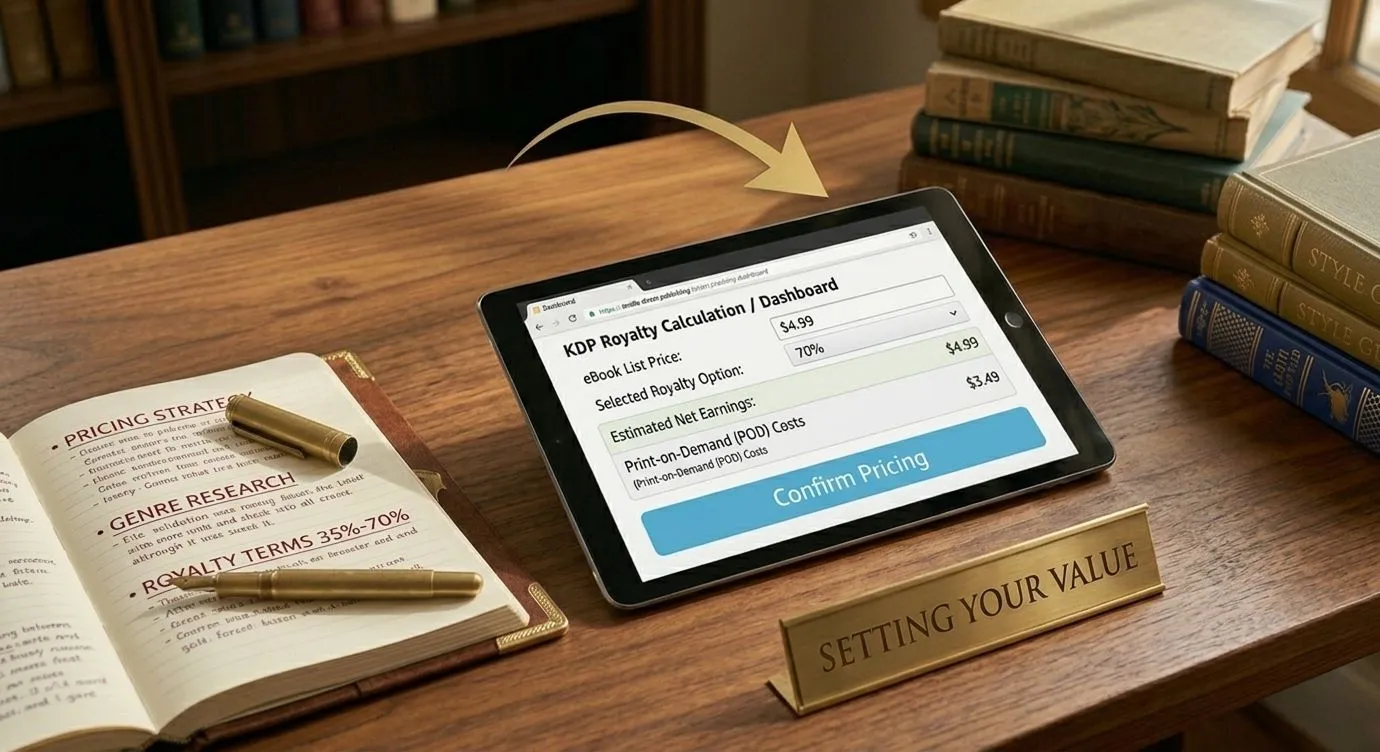
Your pricing decision affects two outcomes, specifically the total number of copies you will sell and the amount you will earn from each individual sale. Lower prices may get you higher purchase volume, yet this approach reduces your per-copy income.
On the other hand, higher prices increase the royalty amount you receive per sale, but these prices may reduce the total volume of copies sold.
Under the self-publishing model, authors retain the majority of their copyright ownership and receive significantly higher royalty percentages compared to what traditional publishing contracts typically offer.
Most first-time authors establish their eBook prices somewhere between $2.99 and $9.99, because this price range qualifies for the most favorable royalty terms on most major platforms.
Royalty percentages generally fall somewhere between 35 and 70 percent, with the exact figure depending on your listed price and chosen platform.
Print book royalties begin by deduction of printing expenses upfront, after which your percentage is applied to the remaining balance.
Comparable books within your genre should be researched thoroughly before you lock in your final pricing decisions.
If certain steps in this guide appear challenging after reading these explanations, please understand that you are far from alone in feeling this way. You can get professional assistance along this journey as sought by countless first-time authors before you.
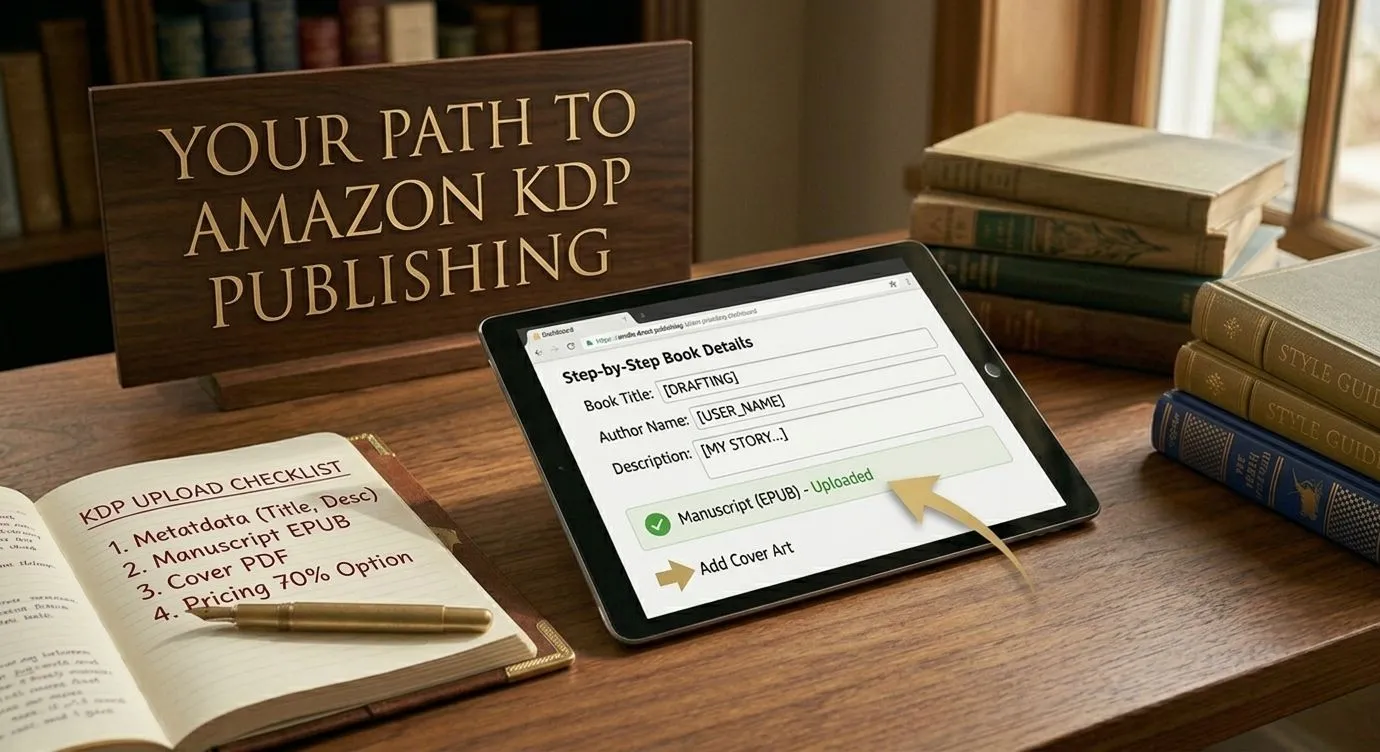
Choosing to self publish a book on amazon through Amazon's Kindle Direct Publishing (KDP) is how many first-time authors begin. Both eBooks and paperbacks are accepted by the platform, and no upfront fees are charged. Your title can be listed by following the steps below.
Your manuscript file must be prepared along with clean formatting and design. Depending on book type, Word documents, EPUB, and PDF formats are accepted by KDP.
Your cover should be designed separately, or Amazon's free cover creator tool may be used. Your file must meet the specific size requirements measured in pixels.
After logging into KDP, click "Create a new title." Every metadata field must be filled out, including the book description and author name, exactly as you wish them displayed.
Both manuscript and cover files are then uploaded. Before proceeding, the system will run an automated validation check.
Your price must be set and a royalty preference selected. In most regions, pricing between $2.99 and $9.99 unlocks the higher 70 percent royalty tier.
A limitation worth remembering: when the 70 percent royalty option is selected, a delivery fee per download is charged by Amazon depending on your eBook's file size.
When opting for professional self publishing, you understandably need an upfront investment. For a typical project, you may need between $2,500 and $5,000, though according to industry data, premium projects exceed $8,000. We have listed standard ranges for essential services below.
| Service | Typical cost range | Notes |
|---|---|---|
| Editing | ||
| Developmental editing | $1,600 – $2,400 | Based on per-word rates for structural and content editing. |
| Copy editing | $640 – $1,200 | Focuses on sentence flow, grammar, and consistency. |
| Proofreading | $320 – $800 | Final pass for spelling, punctuation, and minor formatting errors. |
| Cover design | ||
| Premium custom cover | $500 – $1,000+ | High-end custom designs with extensive illustration or photo manipulation. |
| Professional custom cover | $250 – $495 | Most common price point for professional covers including eBook and print files. |
| Entry-level custom or premade | $100 – $245 | Quality premade covers or custom eBook-only designs. |
| Budget premade | $5 – $95 | Lower-cost premade options; higher risk of generic or reused designs. |
| Formatting | ||
| Professional interior formatting | $250 – $750 | Converts manuscript into properly formatted eBook and print files. |
| DIY formatting | $0 – $150 | Cost of formatting software if not using free tools. |
| ISBN (United States) | ||
| Single ISBN | $125 | Purchased directly from Bowker, the official U.S. ISBN agency. |
| Block of ten ISBNs | $295 | Bulk discount for authors publishing multiple books or formats. |
| Free ISBN | $0 | Provided by Amazon KDP, though Amazon is listed as publisher of record. |
| Total estimated investment | ||
| Budget (minimal professional services) |
$400 – $1,500 | Mostly self-handled with limited professional help. |
| Standard (professional services) |
$2,400 – $4,400 | Includes professional editing, custom cover, and formatting. |
| Premium (full-service support) |
$5,000+ | Comprehensive editing, high-end cover design, and marketing assistance. |
Even experienced authors make avoidable errors when they publish a book for the first time. If you recognize these traps before encountering them, you will save time, money, and frustration.
Skipping professional editing. Readers notice spelling errors and awkward sentences, after all. When a book is laden with mistakes, it signals low quality to potential buyers. For this reason, negative reviews will reflect that impression and discourage future purchases.
Using an amateur cover design. Your cover creates the first impression that browsers see and a poorly designed cover suggests the content inside is equally unprofessional. Regardless of how well you actually wrote the manuscript, this perception will stick.
Neglecting marketing until after publication. Books do not sell themselves, as you might expect. It is a poor practice to wait until your book is live to think about promotion. By doing so, however, you may miss the crucial launch window when algorithms pay the most attention to new releases.
Expecting immediate results. IPNE describes how indie authors tend to abandon marketing tactics too quickly when sales do not arrive immediately. The problem is that most marketing efforts do not produce results right away. If you do this, you will never know whether a particular strategy failed or whether your execution of it did unless you give it sufficient time to work.
Marketing starts while you are still writing the first draft. Research from the University of Maribor describes self-published authors as entrepreneurial micro-firms. This means you must actively build brand identity, digital marketing skills, and reader communities to navigate platform-based markets successfully.
Build an email list before launch. The IPNE report emphasizes that collectible reader relationships matter quite a lot. For instance, subscribers become your direct audience when the book releases. This approach allows you to communicate with buyers without relying solely on algorithms.
Study successful authors in your genre. The same report suggests finding authors who have reached the position you want for yourself. Study what they did, and then do what worked for them. After all, your best marketing ideas often come from observing others who have already walked the path before you.
Avoid putting all your efforts into one method. According to IPNE, marketing success is cumulative in nature, meaning you have to test and see what works and what does not. If you place all your bets on a single tactic and it fails, you will have no backup plan whatsoever. A number of complementary efforts must work together over time, though the specific mix depends entirely on your genre and your target audience.
Give each strategy enough time to work. The IPNE source warns that anyone who promises a single "bestseller" service is preying on hopes and dreams, plain and simple. For this reason, you should pick fewer strategies, execute them well, and allow enough time for results to emerge before evaluating their effectiveness.
Marketing requires patience, and most successful campaigns take months, not days, to produce noticeable results.
You should expect trade-offs to come with every publishing path. Though self-publishing has clear advantages, the effort it demands, however, would typically overwhelm any new author.
Pros
Creative control stays fully with you. This includes content decisions, cover choices, and pricing strategies.
Royalty rates fall between 40 and 70 percent. You will rarely ever see traditional contracts that approach these numbers.
Your book moves from final manuscript to live listing in days. The traditional route, in contrast, takes years.
Permanent ownership of your copyright and all subsidiary rights is yours alone.
Cons
Every service requires upfront payment. Editing, cover design, and formatting all cost money.
You do not have any publicity team and so marketing falls entirely on your shoulders.
Physical bookstores rarely stock self-published titles making separate distribution arrangements necessary.
There is a learning curve that awaits you. You are responsible for formatting, metadata, platform rules, and pricing, all of which require study.
None of these cons are permanent barriers. Many authors, for instance, overcome them by partnering with experienced professionals. This way, they receive professional help in editing, get design assistance, and distribution guidance. With the right help, self-publishing becomes far less intimidating.
If these challenges feel overwhelming, explore our self-publishing services or request a free consultation.
Most first-time authors assume the path from manuscript to published book is complicated. But when you consider the pros of self publishing: no agent required, no publishing deal, full control over royalties and no expensive traditional publishing packages, the effort becomes worth it.
Do not worry as thousands of authors complete each step in this guide every single year. Some seek professional help, whereas others do it alone. Either approach works. The only deciding factor for success is starting.
Self-publishing puts the decision where it belongs: in your hands. Your finished manuscript deserves to find its readers. That decision, ultimately, is yours to make. If you need professional services, you may contact us for a free consultation.
Yes, but only to a degree. Platforms like Amazon KDP and Barnes & Noble Press charge no upfront fees for uploads. The catch, however, is that you handle everything yourself. But you can still hire professional services for editing, cover design, and formatting which usually require payment.
That depends entirely on your manuscript. Uploading files to a platform takes an hour or two. Writing, editing, and formatting, on the other hand, take months. Most first-time authors, therefore, spend three to six months moving from completed draft to live listing.
Yes, for print distribution to bookstores and libraries. Amazon provides a free ISBN for eBooks sold exclusively on its platform. But if you want your book across multiple retailers, purchasing your own ISBN gives you more control.
Yes, according to market share. Amazon KDP holds the largest share by far and this is why it provides the widest audience reach for new authors. But "best" depends on your goals. Barnes & Noble Press or Kobo, for example, may suit certain genres or international markets better. Many authors start with Amazon, then expand elsewhere.